12.4 - תכנות אסינכרוני עם eventloop - הרצאה
הקדמה
איך Node.js מטפל באלפי חיבורים עם thread אחד? איך Redis, אחד ממסדי הנתונים המהירים בעולם, עובד בthread יחיד? איך Nginx מגיש אלפי בקשות בו-זמנית?
התשובה: לולאת אירועים - event loop.
בפרק 11 למדנו על epoll שנותן לנו לנטר הרבה file descriptors. בפרק 12.3 ראינו את io_uring שמבצע I/O אסינכרוני. עכשיו נלמד את הדפוס שמחבר את הכל: ה-event loop.
הרעיון
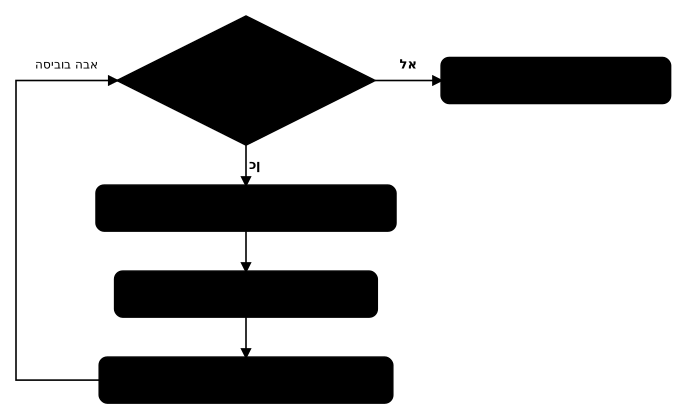
לולאת אירועים היא הפשטות עצמה:
while (true) {
    events = wait_for_events();    // epoll_wait / io_uring_wait
    for each event:
        handle(event);             // call the appropriate callback
}
זה הכל. אין threads מרובים, אין mutex, אין deadlock. הthread אחד שמחכה לאירועים ומטפל בהם אחד אחרי השני.
הכלל הזהב
שום דבר לא חוסם. כל handler חייב לסיים מהר. אסור:
- sleep() - תקפיא את כל השרת.
- קריאת I/O חוסמת (blocking read) - כל הלקוחות יחכו.
- חישוב כבד - כל הלקוחות יחכו.
אם צריך לעשות משהו שלוקח זמן - תעביר את זה לthread pool נפרד (כמו שלמדנו ב-12.1) ותקבל את התוצאה כאירוע.
מימוש event loop בסיסי
בואו נבנה event loop פשוט אבל שלם מעל epoll:
#include <stdio.h>
#include <stdlib.h>
#include <string.h>
#include <unistd.h>
#include <sys/epoll.h>
#include <sys/timerfd.h>
#include <sys/signalfd.h>
#include <signal.h>
#include <errno.h>
#include <stdbool.h>

#define MAX_EVENTS 64
#define MAX_FDS 1024

// callback types
typedef void (*event_callback_t)(int fd, void *data);

// event registration
typedef struct {
    int fd;
    event_callback_t on_read;
    event_callback_t on_write;
    void *data;
    bool active;
} event_source_t;

// the event loop
typedef struct {
    int epoll_fd;
    event_source_t sources[MAX_FDS];
    bool running;
} event_loop_t;

event_loop_t *event_loop_create(void) {
    event_loop_t *loop = calloc(1, sizeof(event_loop_t));
    loop->epoll_fd = epoll_create1(0);
    loop->running = true;
    return loop;
}

void event_loop_destroy(event_loop_t *loop) {
    close(loop->epoll_fd);
    free(loop);
}

// register fd for reading
void event_loop_add_reader(event_loop_t *loop, int fd,
                            event_callback_t callback, void *data) {
    struct epoll_event ev = {
        .events = EPOLLIN,
        .data.fd = fd
    };
    epoll_ctl(loop->epoll_fd, EPOLL_CTL_ADD, fd, &ev);

    loop->sources[fd].fd = fd;
    loop->sources[fd].on_read = callback;
    loop->sources[fd].data = data;
    loop->sources[fd].active = true;
}

// register fd for writing
void event_loop_add_writer(event_loop_t *loop, int fd,
                            event_callback_t callback, void *data) {
    struct epoll_event ev = {
        .events = EPOLLOUT,
        .data.fd = fd
    };
    epoll_ctl(loop->epoll_fd, EPOLL_CTL_ADD, fd, &ev);

    loop->sources[fd].fd = fd;
    loop->sources[fd].on_write = callback;
    loop->sources[fd].data = data;
    loop->sources[fd].active = true;
}

// remove fd
void event_loop_remove(event_loop_t *loop, int fd) {
    epoll_ctl(loop->epoll_fd, EPOLL_CTL_DEL, fd, NULL);
    loop->sources[fd].active = false;
}

// stop the loop
void event_loop_stop(event_loop_t *loop) {
    loop->running = false;
}

// the loop itself
void event_loop_run(event_loop_t *loop) {
    struct epoll_event events[MAX_EVENTS];

    while (loop->running) {
        int n = epoll_wait(loop->epoll_fd, events, MAX_EVENTS, -1);
        if (n < 0) {
            if (errno == EINTR) continue;
            perror("epoll_wait");
            break;
        }

        for (int i = 0; i < n; i++) {
            int fd = events[i].data.fd;
            event_source_t *src = &loop->sources[fd];

            if (!src->active) continue;

            if ((events[i].events & EPOLLIN) && src->on_read) {
                src->on_read(fd, src->data);
            }
            if ((events[i].events & EPOLLOUT) && src->on_write) {
                src->on_write(fd, src->data);
            }
        }
    }
}
שימוש
// read handler
void on_stdin_read(int fd, void *data) {
    (void)data;
    char buf[256];
    ssize_t n = read(fd, buf, sizeof(buf) - 1);
    if (n > 0) {
        buf[n] = '\0';
        printf("got: %s", buf);
    }
}

int main(void) {
    event_loop_t *loop = event_loop_create();

    // listen on stdin
    event_loop_add_reader(loop, STDIN_FILENO, on_stdin_read, NULL);

    printf("type something (Ctrl+C to quit):\n");
    event_loop_run(loop);

    event_loop_destroy(loop);
    return 0;
}
אירועי טיימר - timerfd
לינוקס מספקת timerfd - fd שמתנהג כמו טיימר. כשהטיימר פוקע, הfd הופך ל"מוכן לקריאה", ואפשר לשלב אותו ב-event loop:
#include <sys/timerfd.h>

// create a timer that fires every second
int create_timer(int interval_sec) {
    int tfd = timerfd_create(CLOCK_MONOTONIC, 0);

    struct itimerspec spec = {
        .it_interval = { .tv_sec = interval_sec, .tv_nsec = 0 },  // recurring
        .it_value    = { .tv_sec = interval_sec, .tv_nsec = 0 }   // first
    };
    timerfd_settime(tfd, 0, &spec, NULL);

    return tfd;
}

// timer handler
void on_timer(int fd, void *data) {
    uint64_t expirations;
    read(fd, &expirations, sizeof(expirations));  // must read
    printf("timer fired! (%lu expirations)\n", expirations);
}

// usage with the event loop
int tfd = create_timer(1);  // every second
event_loop_add_reader(loop, tfd, on_timer, NULL);
אירועי סיגנלים - signalfd
בדומה ל-timerfd, אפשר להפוך סיגנלים לfd-ים עם signalfd:
#include <sys/signalfd.h>
#include <signal.h>

int create_signal_fd(void) {
    sigset_t mask;
    sigemptyset(&mask);
    sigaddset(&mask, SIGINT);
    sigaddset(&mask, SIGTERM);

    // block the signals so signalfd receives them
    sigprocmask(SIG_BLOCK, &mask, NULL);

    return signalfd(-1, &mask, 0);
}

void on_signal(int fd, void *data) {
    event_loop_t *loop = (event_loop_t *)data;
    struct signalfd_siginfo info;
    read(fd, &info, sizeof(info));

    printf("got signal %d\n", info.ssi_signo);
    event_loop_stop(loop);
}

// usage
int sfd = create_signal_fd();
event_loop_add_reader(loop, sfd, on_signal, loop);
עכשיו Ctrl+C לא הורג את התוכנית ישר, אלא עובר דרך event loop ומאפשר כיבוי מסודר (graceful shutdown).
דוגמה שלמה: event loop עם טיימר, סיגנלים, ו-stdin
#include <stdio.h>
#include <stdlib.h>
#include <string.h>
#include <unistd.h>
#include <sys/epoll.h>
#include <sys/timerfd.h>
#include <sys/signalfd.h>
#include <signal.h>
#include <stdbool.h>
#include <errno.h>
#include <stdint.h>

// (event_loop_t definition and all the functions from above)

int tick_count = 0;

void on_timer(int fd, void *data) {
    uint64_t exp;
    read(fd, &exp, sizeof(exp));
    tick_count++;
    printf("[tick %d]\n", tick_count);
}

void on_stdin(int fd, void *data) {
    char buf[256];
    ssize_t n = read(fd, buf, sizeof(buf) - 1);
    if (n > 0) {
        buf[n] = '\0';
        // remove the newline
        if (buf[n-1] == '\n') buf[n-1] = '\0';
        printf("you typed: '%s'\n", buf);

        if (strcmp(buf, "quit") == 0) {
            event_loop_t *loop = (event_loop_t *)data;
            event_loop_stop(loop);
        }
    }
}

void on_signal(int fd, void *data) {
    struct signalfd_siginfo info;
    read(fd, &info, sizeof(info));
    printf("\ncaught signal %d, shutting down...\n", info.ssi_signo);
    event_loop_t *loop = (event_loop_t *)data;
    event_loop_stop(loop);
}

int main(void) {
    event_loop_t *loop = event_loop_create();

    // timer - every second
    int tfd = timerfd_create(CLOCK_MONOTONIC, 0);
    struct itimerspec ts = {
        .it_interval = { .tv_sec = 1 },
        .it_value = { .tv_sec = 1 }
    };
    timerfd_settime(tfd, 0, &ts, NULL);
    event_loop_add_reader(loop, tfd, on_timer, NULL);

    // stdin
    event_loop_add_reader(loop, STDIN_FILENO, on_stdin, loop);

    // signals
    sigset_t mask;
    sigemptyset(&mask);
    sigaddset(&mask, SIGINT);
    sigprocmask(SIG_BLOCK, &mask, NULL);
    int sfd = signalfd(-1, &mask, 0);
    event_loop_add_reader(loop, sfd, on_signal, loop);

    printf("event loop running. type 'quit' or Ctrl+C to exit.\n");
    event_loop_run(loop);

    close(tfd);
    close(sfd);
    event_loop_destroy(loop);
    printf("bye.\n");
    return 0;
}
קולבקים מול מכונת מצבים - callbacks vs state machines
בעיית הcallbacks
כשיש פרוטוקול מורכב (למשל HTTP), הלוגיקה מתפצלת בין הרבה callbacks, וקשה לעקוב אחרי הזרימה. זה מה שמכנים "callback hell":
// hard to follow: the logic is scattered
void on_request_read(int fd, void *data) {
    // read the request...
    // when done, register a callback for processing
}
void on_request_processed(int fd, void *data) {
    // process...
    // when done, register a callback for writing
}
void on_response_written(int fd, void *data) {
    // written...
    // go back to reading a new request
}
מכונת מצבים - state machine
גישה חלופית: כל חיבור מחזיק מצב (state), וhandler אחד מטפל בכל המצבים:
typedef enum {
    STATE_READING_REQUEST,
    STATE_PROCESSING,
    STATE_WRITING_RESPONSE,
} conn_state_t;

typedef struct {
    int fd;
    conn_state_t state;
    char read_buf[4096];
    int read_pos;
    char write_buf[4096];
    int write_pos;
    int write_len;
} connection_t;

void handle_connection(int fd, void *data) {
    connection_t *conn = (connection_t *)data;

    switch (conn->state) {
    case STATE_READING_REQUEST: {
        ssize_t n = read(fd, conn->read_buf + conn->read_pos,
                         sizeof(conn->read_buf) - conn->read_pos);
        if (n <= 0) { /* close */ return; }
        conn->read_pos += n;

        // check if we received a complete request
        if (strstr(conn->read_buf, "\r\n\r\n")) {
            conn->state = STATE_PROCESSING;
            // process the request (directly, since it's fast)
            process_request(conn);
            conn->state = STATE_WRITING_RESPONSE;
        }
        break;
    }

    case STATE_WRITING_RESPONSE: {
        ssize_t n = write(fd, conn->write_buf + conn->write_pos,
                          conn->write_len - conn->write_pos);
        if (n <= 0) { /* error */ return; }
        conn->write_pos += n;

        if (conn->write_pos >= conn->write_len) {
            // finished writing, go back to reading
            conn->state = STATE_READING_REQUEST;
            conn->read_pos = 0;
            conn->write_pos = 0;
        }
        break;
    }

    default:
        break;
    }
}
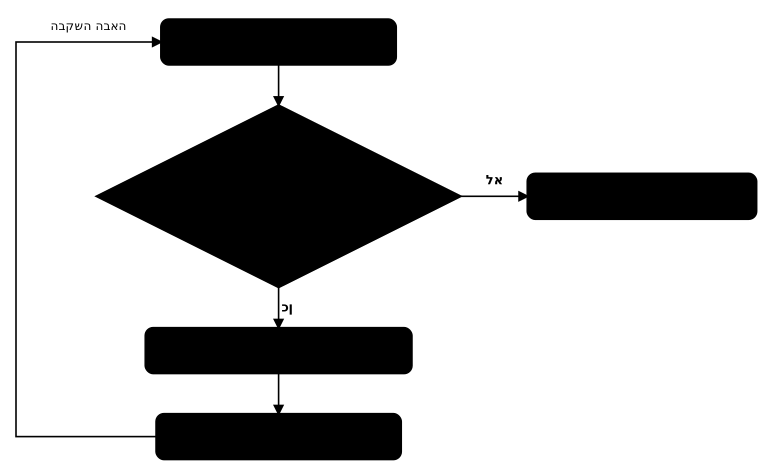
מכונת מצבים יותר ברורה כשיש פרוטוקול עם שלבים מוגדרים.
קורוטינות ותכנות אסינכרוני - coroutines and async/await
הבעיה
גם callbacks וגם מכונות מצבים מסרבלים: הלוגיקה שבקוד סינכרוני (רגיל) היא שורה אחרי שורה, אבל בקוד אסינכרוני היא מפוצלת.
קוד סינכרוני (פשוט, אבל חוסם):
קוד אסינכרוני (לא חוסם, אבל מסורבל):
הפתרון: קורוטינות - coroutines
קורוטינה היא פונקציה שיכולה "להשהות" את עצמה ולחזור מאוחר יותר מאותה נקודה. זה מאפשר לכתוב קוד שנראה סינכרוני אבל עובד אסינכרוני:
// pseudo-code with coroutines
async function handle_client(fd):
    request = await read(fd)       // "pause" until there's data
    response = process(request)
    await write(fd, response)      // "pause" until the write completes
בC אין תמיכה מובנית בcoroutines (בניגוד ל-Go, Python, Rust, C#). אבל אפשר לממש אותן עם:
- setjmp/longjmp - שמירה ושחזור של הקונטקסט.
- ucontext - API יותר נוח (הוצא משימוש אבל עדיין עובד בלינוקס).
- תוספות קומפיילר (GCC coroutines).
- ספריות כמו libco, minicoro.
העניין הוא שהקונספט הזה הוא הבסיס לasync/await בכל השפות המודרניות:
- גורוטינות ב-Go - הruntime של Go מנהל אלפי goroutines מעל מספר קטן של threads.
- async/await ב-Python (asyncio) - coroutines שרצות על event loop.
- async/await ב-Rust - coroutines שמתקמפלות למכונת מצבים.
- async/await ב-JavaScript (Node.js) - coroutines מעל libuv event loop.
שרת HTTP פשוט עם event loop
בואו נבנה שרת HTTP מינימלי שמשתמש ב-event loop שלנו:
#include <stdio.h>
#include <stdlib.h>
#include <string.h>
#include <unistd.h>
#include <fcntl.h>
#include <sys/socket.h>
#include <sys/epoll.h>
#include <netinet/in.h>
#include <errno.h>
#include <stdbool.h>

#define PORT 8080
#define MAX_EVENTS 64
#define BUF_SIZE 4096

typedef struct {
    int fd;
    char read_buf[BUF_SIZE];
    int read_len;
    char write_buf[BUF_SIZE];
    int write_len;
    int write_pos;
    bool writing;
} http_conn_t;

int epfd;

// make fd non-blocking
void set_nonblocking(int fd) {
    int flags = fcntl(fd, F_GETFL, 0);
    fcntl(fd, F_SETFL, flags | O_NONBLOCK);
}

// build a simple HTTP response
void build_response(http_conn_t *conn) {
    const char *body = "<html><body><h1>Hello from C event loop!</h1></body></html>";
    conn->write_len = snprintf(conn->write_buf, BUF_SIZE,
        "HTTP/1.1 200 OK\r\n"
        "Content-Type: text/html\r\n"
        "Content-Length: %zu\r\n"
        "Connection: close\r\n"
        "\r\n"
        "%s",
        strlen(body), body);
    conn->write_pos = 0;
    conn->writing = true;
}

// handle read
void handle_read(http_conn_t *conn) {
    ssize_t n = read(conn->fd, conn->read_buf + conn->read_len,
                     BUF_SIZE - conn->read_len - 1);

    if (n <= 0) {
        if (n == 0 || errno != EAGAIN) {
            close(conn->fd);
            free(conn);
        }
        return;
    }

    conn->read_len += n;
    conn->read_buf[conn->read_len] = '\0';

    // check if we've received all the headers
    if (strstr(conn->read_buf, "\r\n\r\n")) {
        // build the response
        build_response(conn);

        // switch to write mode
        struct epoll_event ev = {
            .events = EPOLLOUT,
            .data.ptr = conn
        };
        epoll_ctl(epfd, EPOLL_CTL_MOD, conn->fd, &ev);
    }
}

// handle write
void handle_write(http_conn_t *conn) {
    ssize_t n = write(conn->fd, conn->write_buf + conn->write_pos,
                      conn->write_len - conn->write_pos);

    if (n <= 0) {
        if (errno != EAGAIN) {
            close(conn->fd);
            free(conn);
        }
        return;
    }

    conn->write_pos += n;

    if (conn->write_pos >= conn->write_len) {
        // done - close the connection
        close(conn->fd);
        free(conn);
    }
}

int main(void) {
    int server_fd = socket(AF_INET, SOCK_STREAM, 0);
    int opt = 1;
    setsockopt(server_fd, SOL_SOCKET, SO_REUSEADDR, &opt, sizeof(opt));
    set_nonblocking(server_fd);

    struct sockaddr_in addr = {
        .sin_family = AF_INET,
        .sin_port = htons(PORT),
        .sin_addr.s_addr = INADDR_ANY
    };
    bind(server_fd, (struct sockaddr *)&addr, sizeof(addr));
    listen(server_fd, 128);

    epfd = epoll_create1(0);
    struct epoll_event ev = {
        .events = EPOLLIN,
        .data.fd = server_fd
    };
    epoll_ctl(epfd, EPOLL_CTL_ADD, server_fd, &ev);

    printf("HTTP server listening on port %d\n", PORT);

    struct epoll_event events[MAX_EVENTS];
    while (true) {
        int n = epoll_wait(epfd, events, MAX_EVENTS, -1);
        if (n < 0) {
            if (errno == EINTR) continue;
            break;
        }

        for (int i = 0; i < n; i++) {
            if (events[i].data.fd == server_fd) {
                // new connection
                struct sockaddr_in client_addr;
                socklen_t len = sizeof(client_addr);
                int client_fd = accept(server_fd,
                    (struct sockaddr *)&client_addr, &len);

                if (client_fd < 0) continue;
                set_nonblocking(client_fd);

                http_conn_t *conn = calloc(1, sizeof(http_conn_t));
                conn->fd = client_fd;

                struct epoll_event cev = {
                    .events = EPOLLIN,
                    .data.ptr = conn
                };
                epoll_ctl(epfd, EPOLL_CTL_ADD, client_fd, &cev);
            } else {
                http_conn_t *conn = events[i].data.ptr;
                if (events[i].events & EPOLLIN) {
                    handle_read(conn);
                } else if (events[i].events & EPOLLOUT) {
                    handle_write(conn);
                }
            }
        }
    }

    close(server_fd);
    close(epfd);
    return 0;
}
קומפילציה ובדיקה:
gcc -o httpserver httpserver.c
./httpserver

# in another terminal, or in a browser:
curl http://localhost:8080
שימו לב: שרת אחד, thread אחד, אפס mutex-ים, ומטפל בהרבה לקוחות במקביל. זו העוצמה של event loop.
סיכום
| גישה | הthreads | מורכבות | ביצועים | שימושים |
|---|---|---|---|---|
| הthread לכל חיבור | רבים | נמוכה | בינוניים | שרתים פשוטים |
| בריכת תהליכונים (thread pool) | N קבועים | בינונית | טובים | שרתי וב, מסדי נתונים |
| לולאת אירועים (event loop) | 1 | גבוהה | מעולים | שרתים עתירי I/O |
| היברידי (event loop + thread pool) | 1 + N | גבוהה | הכי טובים | שרתים מודרניים (Nginx, Node.js) |
הגישה המודרנית ברוב המערכות היא היברידית: event loop ראשי שמטפל ב-I/O, ו-thread pool לעבודות חישוב כבדות. ככה מקבלים את הטוב משני העולמות.