2.1 - תבניות יצירה - הרצאה
תבניות יצירה - Creational Patterns
תבניות יצירה עוסקות ביצירת אובייקטים. הן פותרות את הבעיה: "איך יוצרים אובייקט בצורה גמישה שניתן לשנות בעתיד?"
נכיר שלוש תבניות יצירה נפוצות: Factory, Singleton ו-Builder.
Factory - מפעל
הבעיה: הקוד שלנו צריך ליצור אובייקטים, אבל אנחנו רוצים לשמור גמישות לגבי איזה אובייקט נוצר.
הפתרון: במקום לקרוא ישירות ל-constructor, קוראים לפונקציית "Factory" שמחליטה מה ליצור.
דוגמה בלי Factory
@app.post("/tasks/{task_id}/notify")
def notify(task_id: int, channel: str):
    if channel == "email":
        notifier = EmailNotifier()
        notifier.send(...)
    elif channel == "sms":
        notifier = SMSNotifier()
        notifier.send(...)
    elif channel == "push":
        notifier = PushNotifier()
        notifier.send(...)
    # every time we add a channel, we need to change this here
Factory Method
from abc import ABC, abstractmethod


class Notifier(ABC):
    @abstractmethod
    def send(self, recipient: str, message: str):
        pass


class EmailNotifier(Notifier):
    def send(self, recipient: str, message: str):
        print(f"Email to {recipient}: {message}")


class SMSNotifier(Notifier):
    def send(self, recipient: str, message: str):
        print(f"SMS to {recipient}: {message}")


class PushNotifier(Notifier):
    def send(self, recipient: str, message: str):
        print(f"Push to {recipient}: {message}")


def create_notifier(channel: str) -> Notifier:
    notifiers = {
        "email": EmailNotifier,
        "sms": SMSNotifier,
        "push": PushNotifier
    }
    notifier_class = notifiers.get(channel)
    if notifier_class is None:
        raise ValueError(f"Unknown channel: {channel}")
    return notifier_class()


# Usage
@app.post("/tasks/{task_id}/notify")
def notify(task_id: int, channel: str):
    notifier = create_notifier(channel)
    notifier.send(...)
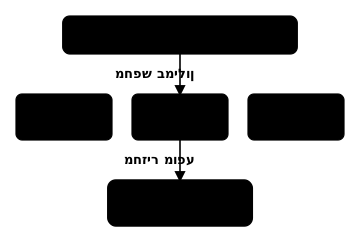
עכשיו להוסיף ערוץ חדש - פשוט מוסיפים מחלקה ומוסיפים ל-dict. הroute לא משתנה.
Singleton - יחיד
הבעיה: חלק מהאובייקטים צריכים להיות ממופים בדיוק פעם אחת בתוכנה - חיבור למסד נתונים, logger, cache connection.
הפתרון: Singleton מבטיח שמחלקה מסוימת תיווצר רק פעם אחת לאורך כל חיי התוכנה.
class DatabaseConnection:
    _instance = None

    def __new__(cls):
        if cls._instance is None:
            print("Creating a new database connection")
            cls._instance = super().__new__(cls)
            import sqlite3
            cls._instance.connection = sqlite3.connect("taskflow.db")
        return cls._instance

    def execute(self, query: str, params: tuple = ()):
        return self.connection.execute(query, params)


# Anywhere in the code
db1 = DatabaseConnection()
db2 = DatabaseConnection()

print(db1 is db2)  # True - same object!
Singleton בפייתון - גישה פשוטה יותר
בפייתון, module-level variables הם בעצמם singletons - נוצרים פעם אחת כשה-module נטען.
# database.py
import sqlite3

_connection = None

def get_connection():
    global _connection
    if _connection is None:
        _connection = sqlite3.connect("taskflow.db")
    return _connection
אזהרה על Singleton
Singleton נחשב לעיתים כ-"anti-pattern" כי הוא יוצר תלות גלובלית שקשה לבדוק. בדיקה שמשתמשת ב-Singleton אמיתי לא יכולה להחליף אותו ב-mock. מומלץ להשתמש בזה במשורה.
Builder - בונה
הבעיה: יצירת אובייקטים מורכבים עם הרבה פרמטרים אופציונליים. Constructor עם 10 פרמטרים קשה לשימוש.
# Hard to read - what does each parameter mean?
task = Task("Test", "Description", 1, "high", True, None, "red", 3, datetime.now(), None)
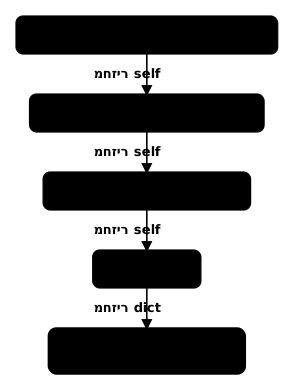
הפתרון: Builder מאפשר לבנות אובייקט שלב אחרי שלב, עם שמות ברורים.
from datetime import datetime


class TaskBuilder:
    def __init__(self, title: str, owner_id: int):
        self._title = title
        self._owner_id = owner_id
        self._description = ""
        self._priority = "normal"
        self._due_date = None
        self._tags = []
        self._color = None

    def with_description(self, description: str) -> "TaskBuilder":
        self._description = description
        return self

    def with_priority(self, priority: str) -> "TaskBuilder":
        if priority not in {"low", "normal", "high", "critical"}:
            raise ValueError(f"Invalid priority: {priority}")
        self._priority = priority
        return self

    def with_due_date(self, due_date: datetime) -> "TaskBuilder":
        self._due_date = due_date
        return self

    def with_tags(self, *tags: str) -> "TaskBuilder":
        self._tags = list(tags)
        return self

    def with_color(self, color: str) -> "TaskBuilder":
        self._color = color
        return self

    def build(self) -> dict:
        return {
            "title": self._title,
            "owner_id": self._owner_id,
            "description": self._description,
            "priority": self._priority,
            "due_date": self._due_date,
            "tags": self._tags,
            "color": self._color
        }


# Usage - very readable
task = (
    TaskBuilder("Fix bug in login", owner_id=5)
    .with_description("Users report a problem logging in via Safari")
    .with_priority("high")
    .with_due_date(datetime(2026, 4, 10))
    .with_tags("bug", "auth", "safari")
    .with_color("red")
    .build()
)
מתי להשתמש ב-Builder?
- כשיש יותר מ-4-5 פרמטרים, חלקם אופציונליים
- כשרוצים לאפשר קריאות גבוהה ("fluent interface")
- כשיצירת האובייקט כוללת ולידציה או לוגיקה
סיכום
| תבנית | מתי להשתמש |
|---|---|
| Factory | כשרוצים גמישות באיזה סוג אובייקט ייווצר |
| Singleton | כשצריך דיוק מופע אחד (connection, logger) |
| Builder | כשיצירת אובייקט מורכבת עם הרבה פרמטרים |